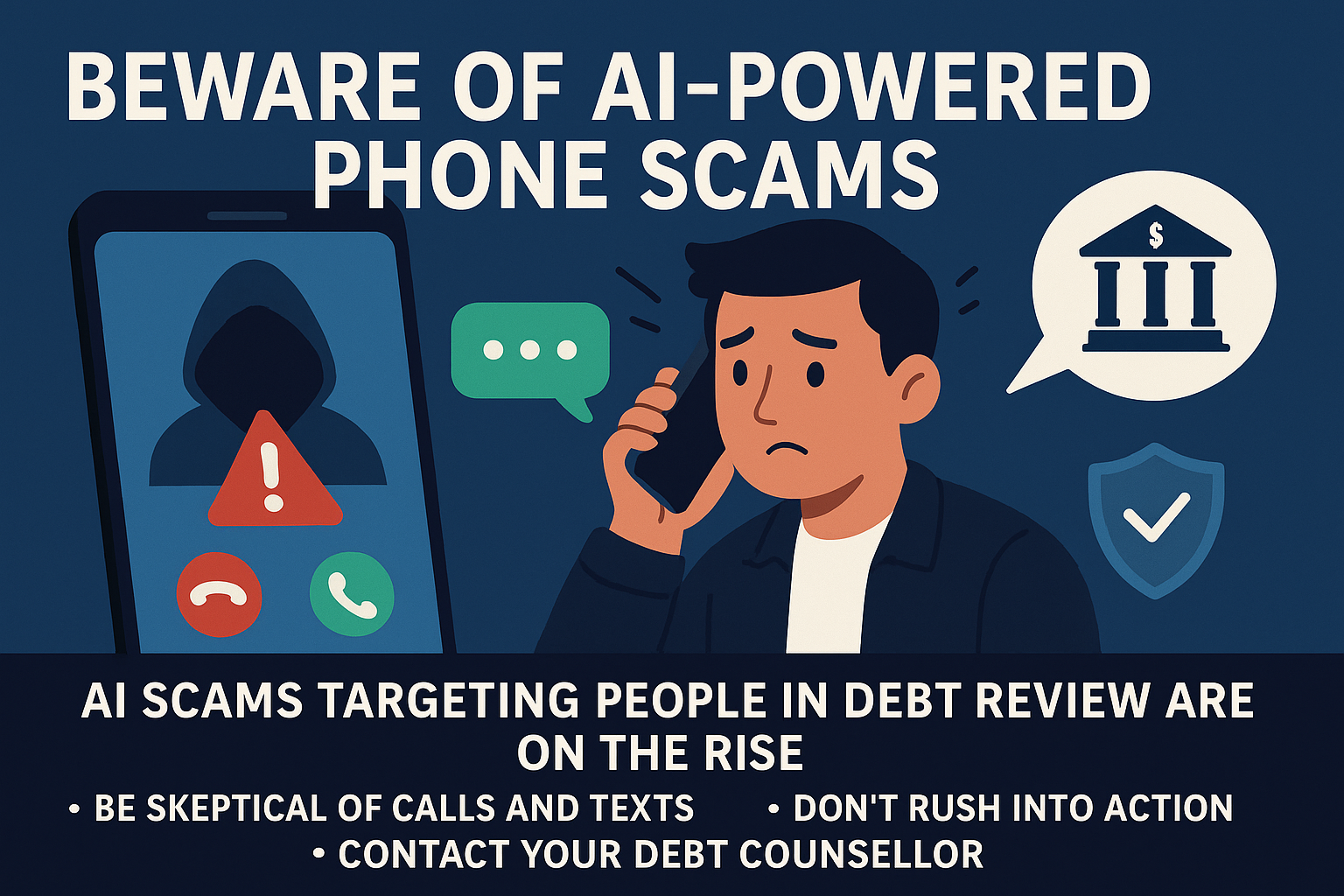
Did you know that criminals are using new technology like artificial intelligence (AI) to
trick people with fake phone calls and SMS messages?
These scams are getting more convincing, and they don’t just target people in general,
they often target people in debt review too. Someone might call pretending to be from your bank
and say you need to do something urgently with your account. They may sound professional and use
real-sounding details, but that doesn’t mean they are who they claim to be.
In the past, scam calls were often easy to spot, but AI has changed the game.
Criminals can now make their voices sound like real people from real companies.
They can send messages that look official and even use personal information to build trust.
That’s why it’s more important than ever to stay calm, be cautious, and think twice before following
instructions from a stranger on the phone.
If you get a suspicious call, one of the safest things you can do is bring your debt counsellor into the conversation.
You can do this while the call is happening or you can ask the caller to email you the details so you can forward them
to your debt counsellor later. If the person on the line refuses or tries to rush you, that’s a big red flag.
It may even be safest to end the call politely and contact your bank or debt counsellor directly using contact
details you know are correct.
Another simple but important tip is to make sure your bank always has your current physical address.
If anything serious happens (such as legal action or a major change) the bank will send you an official letter.
If they have the wrong address, you could miss important notices. Updating your address might seem like a small
thing, but it’s a powerful layer of protection against scams.
Also remember this: no real bank or debt counsellor will phone you out of the blue and ask you to change the bank
details you use to make your monthly debt review payments. And anyone who claims they can “magically” reduce how much
you pay or speed up your debt review process is likely trying to scam you. If something sounds too good to be true,
it almost always is.
Scammers are getting smarter, but you can stay one step ahead by slowing down, staying sceptical, and always
talking to your debt counsellor before you act. If something doesn’t feel right, visit their offices in person
and discuss it. Don’t let AI-powered scams steal your hard-earned money!
When in doubt, trust your debt counsellor, not a stranger on the phone.