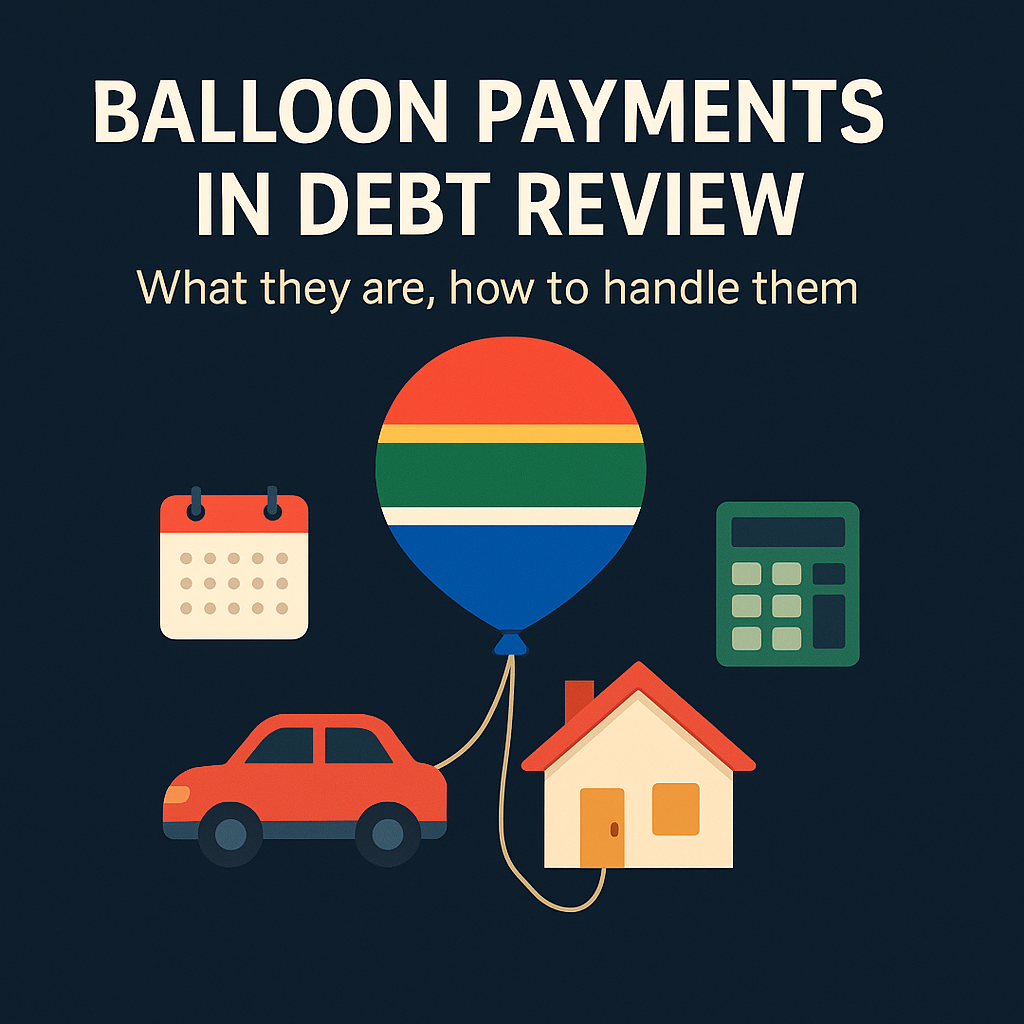
In the world of personal finance, particularly in South Africa, terms such as "balloon payments" and "debt review"
frequently arise when discussing vehicle loans and managing overwhelming debt. If you're considering or already
under debt review, understanding how a balloon payment fits into the picture is crucial. This article breaks
it down step by step, drawing on reliable financial insights to ensure accuracy. We'll explore what these concepts
mean, how they interact, and what you should watch out for to make informed decisions.
What Is a Balloon Payment?
A balloon payment is a financing option commonly used in vehicle loans where you agree to lower monthly
installments throughout most of the loan term, but with a large lump sum payment due at the end. This structure
allows borrowers to reduce their immediate monthly financial burden, making it easier to afford a more expensive
car upfront. For example, instead of spreading the full cost evenly, a portion—often 20-40% of the vehicle's
value—is deferred to the final payment.
Pros of Balloon Payments
Lower Monthly Costs: Your regular payments are reduced, freeing up cash for other expenses.
Access to Better Vehicles: It can make higher-end cars seem more affordable in the short term.
Flexibility for Future Planning: If you expect a bonus, inheritance, or income increase,
you can plan to cover the lump sum later.
Cons of Balloon Payments
Large Final Payment: The balloon amount can be substantial, and failing to pay it could result in repossession or refinancing, which often means incurring more interest and extending the debt.
Ownership Delay: The lender retains ownership of the vehicle until the balloon is settled in full.
Risk of Debt Cycles: Many people end up refinancing the balloon payment, resulting in longer repayment periods and higher overall costs.
Balloon payments are typically part of installment sale agreements under South Africa's National Credit Act (NCA), which should not be confused with residual payments in lease agreements, which may have different rules.
What Is Debt Review?
Debt review is a legal debt relief process in South Africa, introduced by the NCA in 2007,
designed for over-indebted consumers who are unable to keep up with their repayments.
It involves a registered debt counsellor assessing your finances, negotiating with creditors
for lower installments and interest rates and extended repayment terms to create a single, reduced,
and affordable monthly installment. Once under debt review, you're protected from legal actions like
repossession or garnishee orders, as long as you stick to the plan.
The goal is to help you pay off debts without losing assets, but it comes with restrictions:
You can't take on new credit while in the process, and it can last 3-5 years or more, depending on
your situation. It's not the same as debt consolidation or sequestration (bankruptcy); it's specifically
for restructuring existing debts.
How Balloon Payments Are Handled in Debt Review
If your vehicle loan includes a balloon payment, it doesn't automatically disqualify you from debt review. In fact,
most sources confirm that balloon payments linked to vehicle finance are included in the debt restructuring process.
This means the balloon amount is incorporated into your revised repayment plan, spreading it out over extended monthly
installments rather than requiring a lump sum at the end of the term.
For instance:
Your debt counsellor will negotiate to include the entire vehicle debt, including the balloon amount, in the overall debt review arrangement.
This can prevent the need for a big one-time payment, but it might extend the total repayment period. Comprehensive
insurance on the vehicle remains mandatory, and creditors may require proof during the process.
However, there's a nuance: If the balloon is part of a true lease agreement (sometimes referred to
as a financial lease with a residual value), it may be treated differently and potentially excluded from
debt review, as leases aren't always classified as credit agreements under the NCA. In such cases, you'd
need to save separately for the residual payment, since refinancing isn't allowed under debt review. Always
check your contract type with a debt counsellor to confirm.
Potential Impacts and Considerations
Entering debt review with a balloon payment can have both positive and negative effects:
- Positive Impacts: Asset Protection: Debt review generally safeguards your vehicle from repossession, as long as you haven't already received a Section 129 notice (a formal demand for payment) and missed the deadline. Affordable Repayments: By including the balloon, your monthly costs remain manageable, avoiding the stress of a large, looming payment. No New Debt: This approach forces disciplined saving, potentially helping you clear debts more quickly in the long run.
- Negative Impacts: Extended Debt Period: Spreading the balloon can mean you're in debt for a longer period. Credit Implications: Being under debt review flags your credit record, making it impossible to obtain credit until you receive a clearance certificate (Form 19), which requires all debts, including any balloon payments, to be fully settled. Risk of Reckless Lending Claims: Some argue that high balloon structures could be perceived as reckless credit granting, potentially leading to challenges to the agreement. If you're already struggling, a balloon payment can exacerbate over-indebtedness, as it defers rather than reduces debt. Experts often advise against balloons unless you have a solid plan for the final payment.
Advice and Alternatives
To navigate this effectively: Consult a Professional: Speak with a registered debt counsellor as soon as possible.
They can assess if debt review is right for you and how your balloon fits in. Some debt counsellors offer free assessments.
Budget for the Future: Even if your accounts have been restructured by debt review, save extra for emergencies.
Avoid Balloons If Possible: Financial advisors recommend shorter loan terms without balloon payments to minimise interest and debt cycles.
Alternatives to Debt Review:. For severe cases, sequestration may be an option, but it has more downsides, such as asset liquidation.
Remember, debt review is a tool for relief, not a quick fix. Staying committed to the plan is key to regaining financial stability.
Conclusion
Balloon payments can make vehicle ownership seem more accessible, but often complicate
debt management, especially under debt review. While they are typically included and restructured for
affordability, they highlight the importance of long-term planning to avoid perpetual debt.
If you're facing this situation, seek expert advice promptly—knowledge and preparation are your best
defences against debt pitfalls.
For personalised guidance on debt counselling, contact Debt Solutions at 084 589 7000.