The middle phase of debt review is where the real journey
takes place. By this stage, the plan is in place, payments
have started, and there is a sense of structure. Many people
feel relieved after reaching this point, but it is also
where the process becomes a test of consistency and
discipline. The plan may be clear, but life does not always
cooperate.
One of the biggest challenges during this phase is dealing
with unexpected expenses. A car that needs urgent repairs, a
burst geyser, or a broken appliance can place immediate
pressure on your budget. Medical costs and family
responsibilities can add further strain. These are not
unusual situations. They are part of normal life, and they
often arrive at the worst possible time.
Insurance can help manage some of these risks, but it comes with its own challenges. Claims may not cover the full cost, and excess payments still need to be paid. This means that even when you have done the right thing by insuring your assets, there can still be financial pressure.
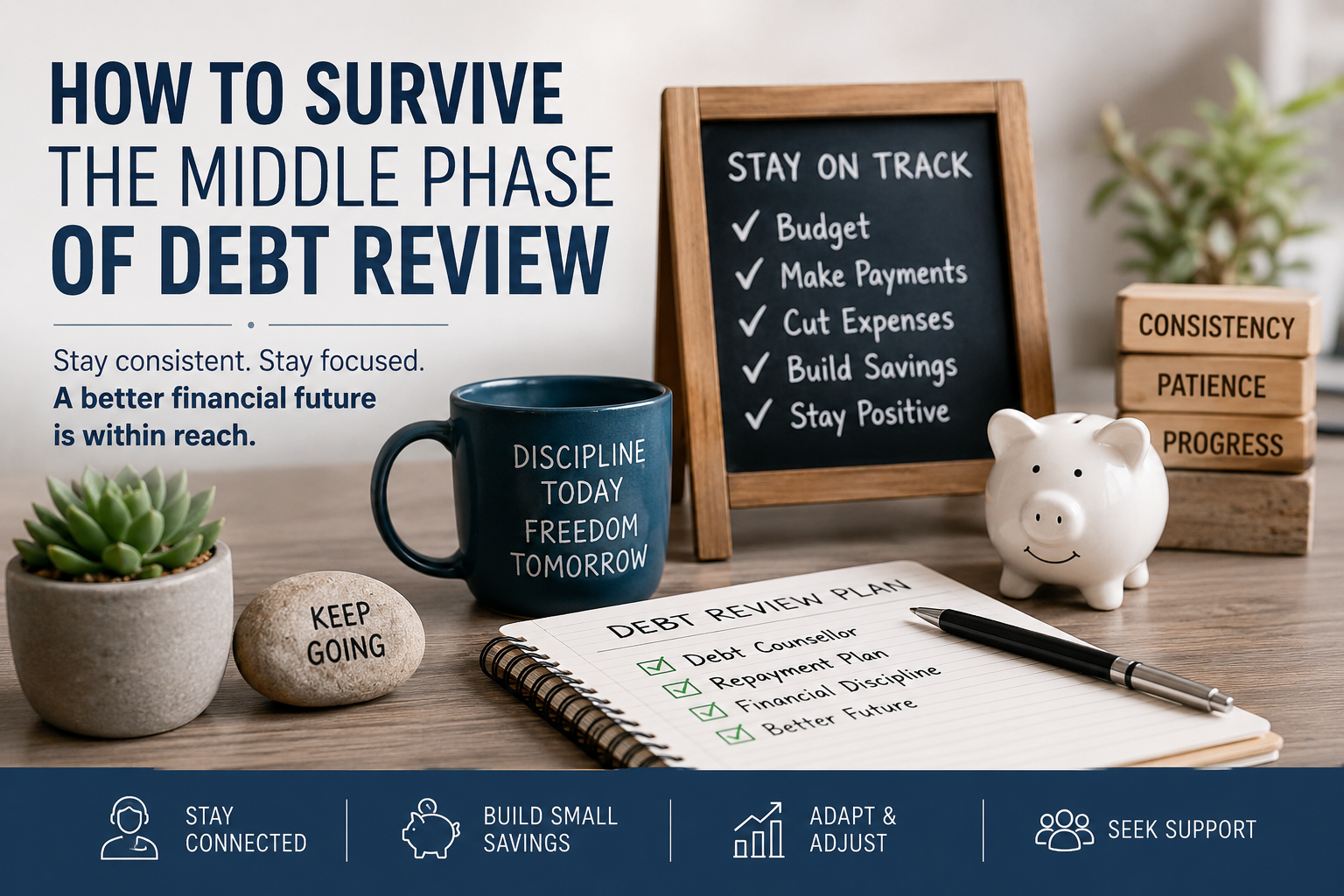
The key to success in this phase is not avoiding challenges,
but learning how to handle them. Building small savings
buffers, even if they start very small, can make a big
difference over time. Adjusting your lifestyle further,
finding more affordable options, and cutting back where
possible all help to keep your plan on track.
It is also important to stay connected to your support
system. If your financial situation changes significantly,
your debt counsellor can help you review your plan and make
necessary adjustments. Ignoring problems or trying to manage
everything alone can make things harder.
Despite these challenges, this phase is also where real
progress happens. As you continue to make payments, smaller
debts begin to fall away. The number of accounts you are
dealing with decreases, and your sense of control grows.
These small wins are important because they show that your
effort is working.
The middle of debt review is not easy, but it is where
lasting change takes place. By staying consistent and
adapting to the challenges that come your way, you build the
habits and discipline needed for long term financial
stability. This is what ultimately leads to completing the
process successfully.